
|
|
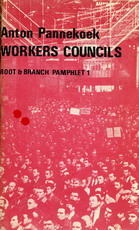
Workers' Councils
Pannekoek, Anton
http://www.connexions.org/CxArchive/MIA/pannekoe/1947/workers-councils.htmhttp://www.marxists.org/archive/pannekoe/1947/workers-councils.htm Year First Published: 1941 Year Published: 1947 Pages: 109pp Resource Type: Pamphlet Cx Number: CX6649 Pannekoek says that opposite to the stronger domination by state-directed planned economy of the new capitalism stands what Marx called the association of free and equal producers. So the call for unity must be supplemented by indication of the goal: take the factories and machines; assert your mastery over the productive apparatus; organize production by means of workers' councils. Abstract: - Table of Contents Preface The Task: Labor Law and Property Shop Organization Social Organization Objections Difficulties Council Organization Growth The Fight: Trade Unionism Direct Action Shop Occupation Political Strikes The Russian Revolution The Workers' Revolution Excerpt: The political power of the State officials is greatly strengthened by their economic power, by their command over the means of production, the foundation of society. The principle of the working class is in every respect the exact opposite. The organization of production by the workers is founded on free collaboration: no masters, no servants. The combination of all the enterprises into one social organization takes place after the same principle. The mechanism for this purpose must be built up by the workers. Given the impossibility to collect the workers of all the factories into one meeting, they can only express their will by means of delegates. For such bodies of delegates in later times the name of workers' councils has come into use. Every collaborating group of personnel designates the members who in the council assemblies have to express its opinion and its wishes. These took an active part themselves in the deliberations of this group, they came to the front as able defenders of the views that carried the majority. Now they are sent as the spokesmen of the group to confront these views with those of other groups in order to come to a collective decision. Though their personal abilities play a role in persuading the colleagues and in clearing problems, their weight does not lay in their individual strength, but in the strength of the community that delegated them. What carries weight are not simple opinions, but still more the will and the readiness of the group to act accordingly. Different persons will act as delegates according to the different questions raised and the forthcoming problems. Subject Headings |